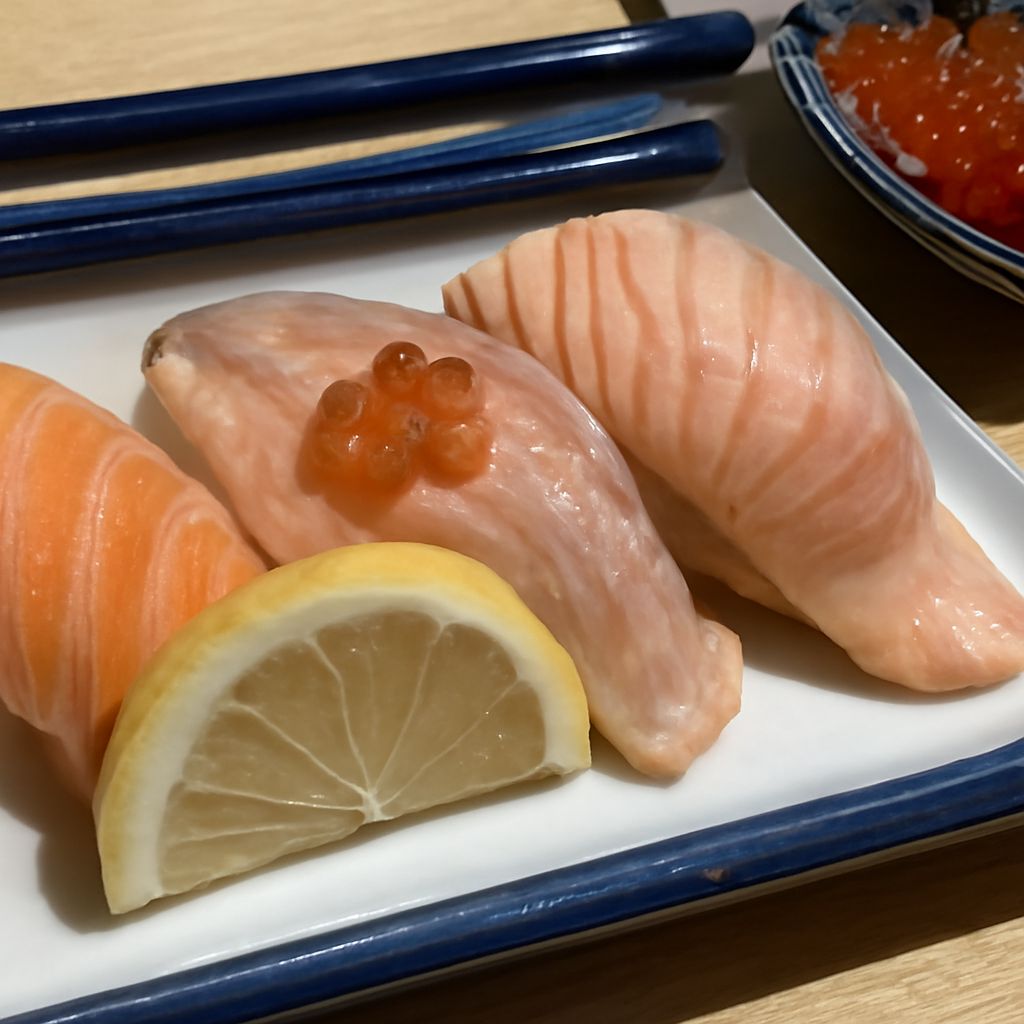
The most common types of sushi fish range from clean, lean tuna to buttery salmon, firm sea bream, cured mackerel, and grilled eel. You will see these fish served as nigiri, sashimi, or fillings in rolls, with Japanese menu names often indicating the species or cut.
Use flavor, texture, and fat level to choose among sushi fish types. Lean fish taste delicate and clean, fatty fish feel softer and richer, while cured and cooked fish add stronger seasoning or deeper roasted flavor.
Types of Sushi Fish: A Menu at a Glance
- Maguro and akami: Tuna; maguro is the general menu name, while akami means the lean, deep-red loin.
- Tai: Sea bream, usually mild, subtly sweet, and firm.
- Hirame: Flounder or flatfish with delicate flavor and a lightly chewy texture.
- Toro: Fatty tuna belly, prized for its soft, buttery texture.
- Sake or shake: Salmon with rich, clean flavor and noticeable oiliness.
- Hamachi: Yellowtail with a silky bite and moderate fat.
- Saba and kohada: Oily fish commonly cured with salt and vinegar.
- Unagi: Freshwater eel, grilled and glazed before serving.
Nigiri places fish over hand-formed rice, sashimi serves sliced fish without rice, and rolls wrap fish with rice and nori. The same fish can appear in all three formats, although premium fatty cuts are especially common as nigiri or sashimi.
Lean and Mild Fish: Akami, Tai, and Hirame for Nigiri and Sashimi
- Akami (lean tuna): Akami has a clean, mineral-like flavor, dense texture, and low-to-moderate fat. It is one of the easiest choices if you want a straightforward fish flavor. You will commonly find it as tuna nigiri, sashimi, or the main filling in maki rolls.
- Tai (sea bream): Tai tastes mild, lightly sweet, and almost nutty, with a firm but tender bite. It works especially well as white-fish nigiri and sashimi. Some chefs score the surface or pair it with citrus and salt to emphasize its delicate flavor.
- Hirame (flounder): Hirame is lean, subtle, and slightly springy rather than soft. Thin slices make a refined sashimi, while thicker pieces suit nigiri. It may also be served with the edge or fin meat, which has a chewier texture and more concentrated flavor.
- Suzuki (sea bass): Suzuki offers a clean, mild taste and firm, moist flesh. It is a common white-fish choice for nigiri and sashimi and occasionally appears in lighter rolls.
Fatty and Rich Fish: Toro, Sake, and Hamachi for Nigiri and Rolls
- Toro (tuna belly): Toro has more fat than akami, giving it a soft, buttery texture and rich flavor. Chutoro is moderately fatty; otoro is the fattiest and most delicate. These cuts are usually served as nigiri or sashimi, where the texture is easiest to appreciate.
- Sake or shake (salmon): Salmon tastes rich, mildly sweet, and distinctly oily, with a soft, smooth texture. It is popular as nigiri and sashimi and is one of the most common fish used in sushi rolls, including avocado and cucumber combinations.
- Hamachi (yellowtail): Hamachi has moderate fat, a silky texture, and a clean, slightly sweet finish. It is excellent as nigiri or sashimi and holds its flavor in rolls. Buri, the mature yellowtail, generally has a firmer, fuller taste.
Firm, Cured, and Cooked Fish: Katsuo, Kohada, Saba, and Unagi
- Katsuo (bonito): Katsuo is lean, meaty, and savory, with a stronger flavor than sea bream or flounder. It may be served raw as sashimi or nigiri, but tataki is especially common: the outside is briefly seared, creating a smoky surface while the center stays rare.
- Kohada (gizzard shad): Kohada is a small, oily silver-skinned fish usually cured with salt and vinegar. The cure gives it a bright, tangy flavor and firmer texture. It is a classic sushi-bar nigiri rather than a typical roll filling.
- Saba (mackerel): Saba has pronounced oiliness, a firm texture, and a bold savory taste. Because fresh mackerel spoils quickly, it is commonly salted and vinegared before becoming nigiri or pressed sushi. It can also appear in specialty rolls.
- Unagi (freshwater eel): Unagi is always cooked, usually grilled and brushed with a sweet-savory tare sauce. Its flesh is soft, rich, and tender, making it popular as nigiri or in rolls. Anago, or conger eel, is another cooked fish with a lighter, softer texture.
Sorting Sushi Fish Types from Shellfish
Fish and shellfish are separate categories on a sushi menu. Fish include tuna, salmon, yellowtail, mackerel, and eel. Shellfish include shrimp or ebi, crab or kani, scallop or hotate, and clam or hamaguri. Shellfish may appear beside fish in nigiri, sashimi, and rolls, but they should not be counted as fish when comparing menu options, flavor, or texture.