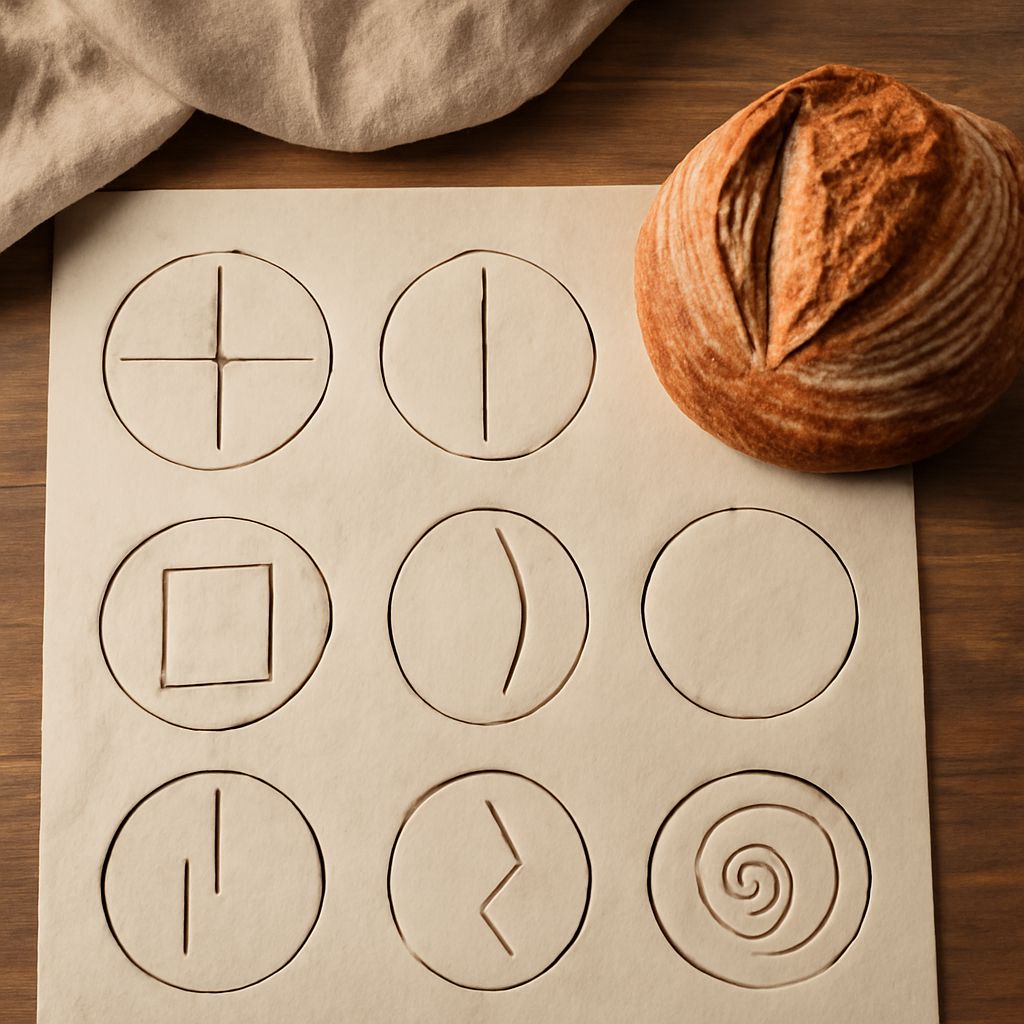
Bread scoring patterns are the cuts you make on dough just before baking to control where the loaf opens in the oven and to shape its finished look. In practical terms, bread scoring helps you guide oven spring, prevent random splits, and give the loaf a clean, intentional crust.
The right bread scoring patterns depend on the dough, the loaf shape, and the result you want. Some cuts are purely functional, while others are part of decorative bread scoring and mainly improve appearance. In both cases, the pattern should match the bread’s structure so the loaf can expand without tearing in the wrong place.
Bread Scoring Patterns: Direct Answer
Bread scoring patterns are planned cuts on the surface of proofed dough made right before baking. Their main job is to control expansion. Their second job is to create a finished design on the crust.
If you want the shortest practical answer: score the dough where you want it to open. A single long slash suits many boules and batards. Repeated shallow cuts work well for baguettes and decorative loaves. Deeper, larger cuts usually create a stronger “ear,” while shallow cuts create a softer, cleaner look.
Good bread scoring designs do three things at once:
- direct the oven spring
- support even baking
- make the loaf look intentional
How Bread Scoring Changes the Bake
When dough goes into a hot oven, gases expand quickly and the crust begins to set. If you do not score the surface, the loaf opens at its weakest point. That can create random cracks or a dense-looking shape. With bread scoring, you give the dough a controlled release point.
Cut depth matters. A shallow score may only open slightly. A deeper score gives the loaf room to spread and lift. The angle matters too. A cut held slightly off vertical can form a raised ridge or ear as the dough expands. A straight-down cut tends to open more evenly and stay flatter.
Dough type also changes the result. High-hydration doughs usually expand more and need confident scoring. Enriched doughs, such as brioche, often need gentler cuts because butter, eggs, and sugar can soften the structure. Rye-heavy doughs may need firmer, more deliberate patterns because they can spread instead of springing sharply.
Shape matters as well. A round boule can handle a central slash, cross, square, or floral pattern. A long batard usually looks best with one or several lengthwise cuts. Small rolls often need simple lines or crosshatches so they expand neatly without losing shape.
Common Bread Scoring Designs and What They Signal
Different bread scoring patterns send different visual and structural signals. You do not need complicated cuts to make good bread, but it helps to know what the common designs do.
Single slash
This is the simplest pattern. One long cut, usually along the center or slightly off-center, works well for batards, sandwich loaves, and many artisan boules. It gives the loaf a clear opening line and often creates a strong bloom.
Double slash or parallel cuts
Two or more parallel cuts work well when you want controlled expansion across a longer loaf. They are common on baguettes and similar shapes. This pattern can create a tidy, balanced look without overwhelming the crust.
Cross
A cross is useful on round loaves and dinner rolls. It helps the bread open in multiple directions and gives a simple, rustic finish. It is also one of the easiest patterns to recognize at a glance.
Square or grid
A square or grid pattern is more decorative and can help larger boules open evenly. It creates a segmented crust that looks deliberate and can reduce large, uncontrolled splits if the dough is strong and well proofed.
Leaf, wheat, or branch pattern
These are classic forms of decorative bread scoring. They often use a central line with smaller side cuts to suggest a stem, leaf, or stalk. These patterns are mostly visual, but they still need clean cuts and proper spacing so the loaf can expand without collapsing the design.
Diamond or lattice
Diamond and lattice patterns are common when you want a decorative finish on round loaves or artisan batards. They look refined and can work especially well on firm doughs. If the cuts are too deep or too close together, though, the loaf may lose structure and spread too much.
How to Choose the Right Scoring Pattern
Choose your pattern based on three things: loaf shape, dough strength, and the look you want.
- For round loaves: use a single slash, cross, spiral, or decorative center pattern.
- For long loaves: use one main slash or a set of parallel cuts.
- For soft doughs: keep the scoring simple so the loaf stays supported.
- For strong artisan doughs: use deeper, cleaner cuts that can open sharply in the oven.
- For visual impact: choose decorative bread scoring that matches the loaf’s size and surface tension.
You also need the right timing. Score after final proofing and just before baking. If you score too early, the cuts can close back up. If you score too late, the dough may deflate or tear unevenly.
Use a very sharp blade or lame. A dull blade drags the dough and seals the cut instead of opening it cleanly. Keep your motion confident and quick. Hesitation can create ragged edges, which often bake into messy cracks instead of neat lines.
Think about depth as a practical setting, not a fixed rule. A typical slash may be around 1/4 inch deep for many lean doughs, but you should adjust based on dough strength and size. Large loaves may need slightly deeper scoring, while tender doughs often do better with smaller, cleaner cuts.
Reading and Recognizing Decorative Bread Scoring
You can recognize decorative bread scoring by how the cuts are arranged and how they affect the loaf after baking. Functional scoring usually follows the loaf’s expansion line. Decorative scoring often adds symmetry, repetition, or a visible motif.
Look for these signs:
- Intentional symmetry: repeated cuts placed at even intervals
- Motif-based shapes: leaves, wheat stalks, diamonds, stars, or spirals
- Shallow decorative cuts: lines that add design without taking over the loaf
- Mixed-purpose scoring: a main opening slash combined with smaller accent cuts
Not every pretty loaf is purely decorative. Many bakery-style designs still serve a structural purpose. A pattern may guide expansion in one area while creating a visual frame in another. That is why experienced bakers often treat bread scoring designs as both technical and artistic.
If you are comparing loaves, the easiest way to read the scoring is to ask what the cuts are telling the dough to do. If the loaf opens along the slash line, the scoring worked. If the crust tears elsewhere, the scoring was too shallow, too late, or too weak for the dough’s strength. If the loaf opens well and looks clean, the pattern matched the bread.